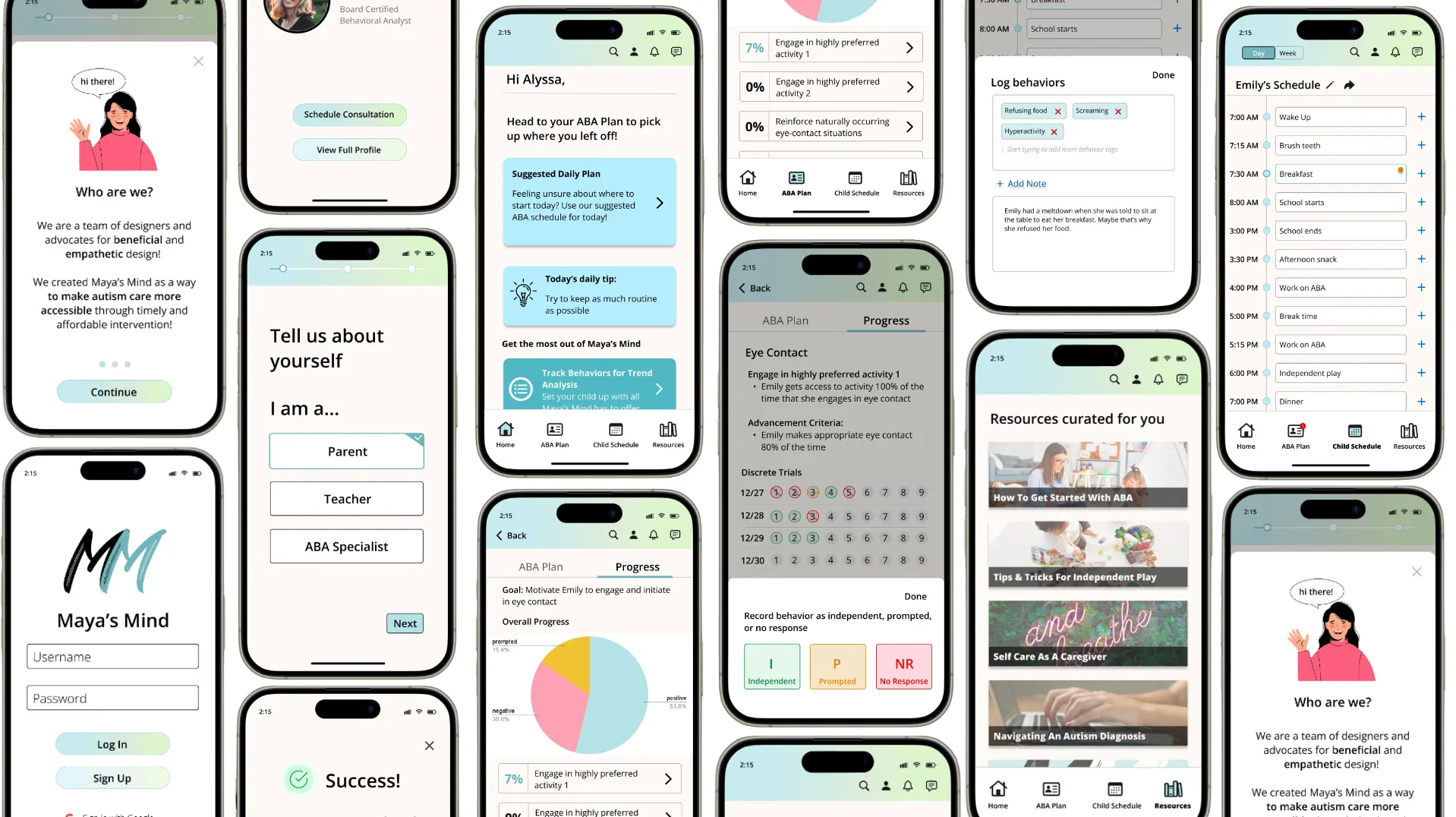
Why This Project
This project is deeply personal to me. I chose to work on making autism care more accessible in honor of two close family members who are part of the ASD community. I wanted to find a way to help the parents of children with autism -- because helping them enables them to be there for their children.
After extensive research, I learned that the biggest gap in care is getting timely and affordable intervention. Maya's Mind is all about helping those who cannot help themselves, and that was the guiding principle behind creating this app.
Understanding the Problem
To understand the impact of Maya's Mind, it helps to understand the landscape of autism care:
75M+
People globally have autism
1 in 100
Children globally are diagnosed with ASD
$62K-250K
Annual cost of ABA therapy without insurance
The gold standard of care is Applied Behavioral Analysis (ABA) therapy. But access to ABA includes long wait times due to resource constraints and is extremely expensive, making it inaccessible to lower-income families.
Additionally, even with ABA therapy, children still struggle in school due to a disconnect between ABA care and school activities. A solution that makes ABA care more accessible and works in conjunction with the school system could greatly improve outcomes.
Research & Discovery
Market Positioning
I conducted competitor analyses and desk research to understand where Maya's Mind could have a competitive advantage. I discovered that Maya's Mind offers a unique product with no direct competitors in the current market -- nothing else combines AI-assisted ABA plan generation with BCBA oversight and school integration.
Interview Insights
I conducted interviews across nine parents of children with autism and two special education teachers. The findings were striking:
8 out of 9 parents
Were comfortable using AI and technology in their children's care
7 out of 9 parents
Lacked awareness about autism before diagnosis and believe their child missed out on early intervention
7 out of 7 parents
Who were aware of ABA therapy expressed pain points in gaining access
100% of participants
Believed combining ABA efforts at home with school behaviors would help children succeed
User Personas
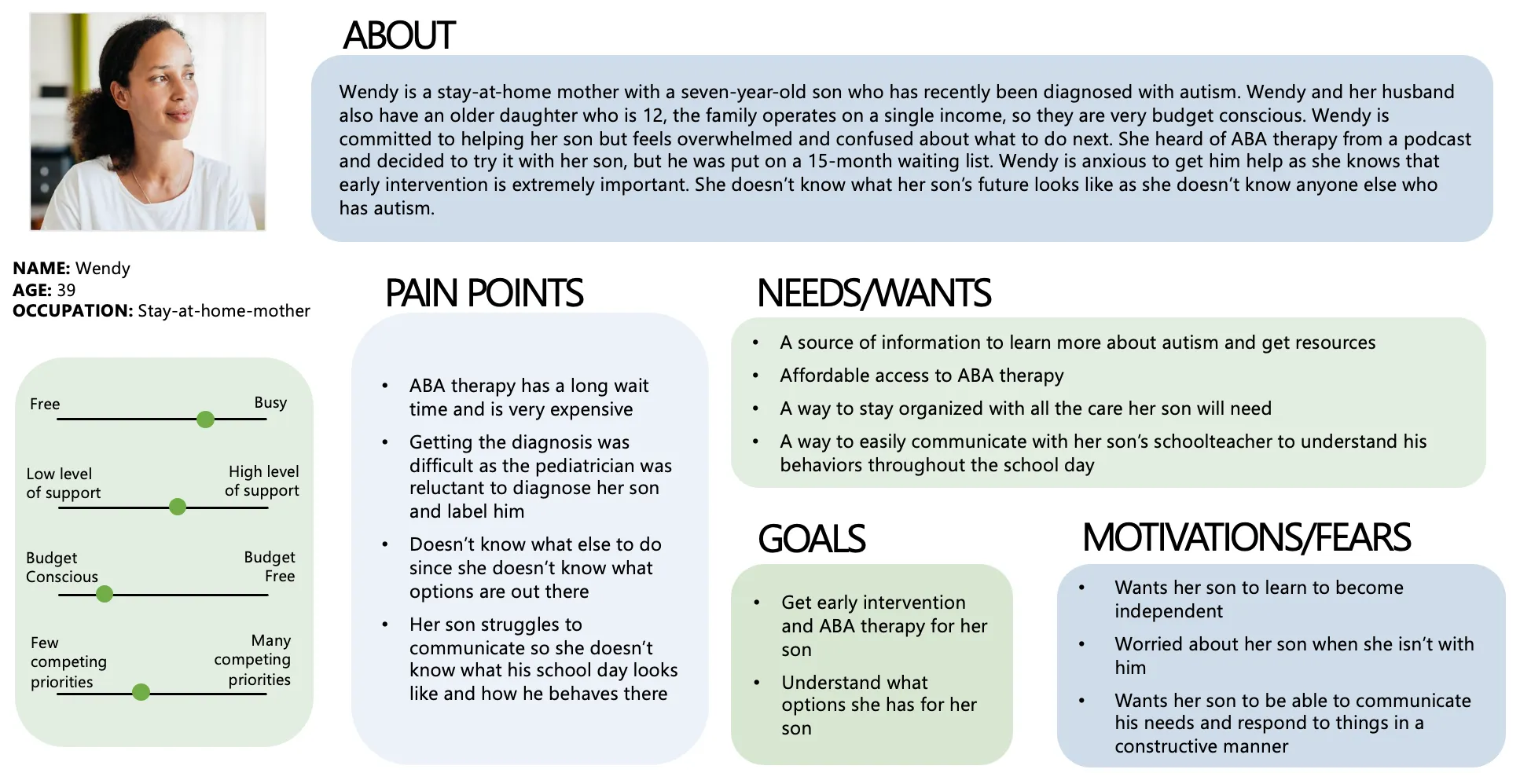
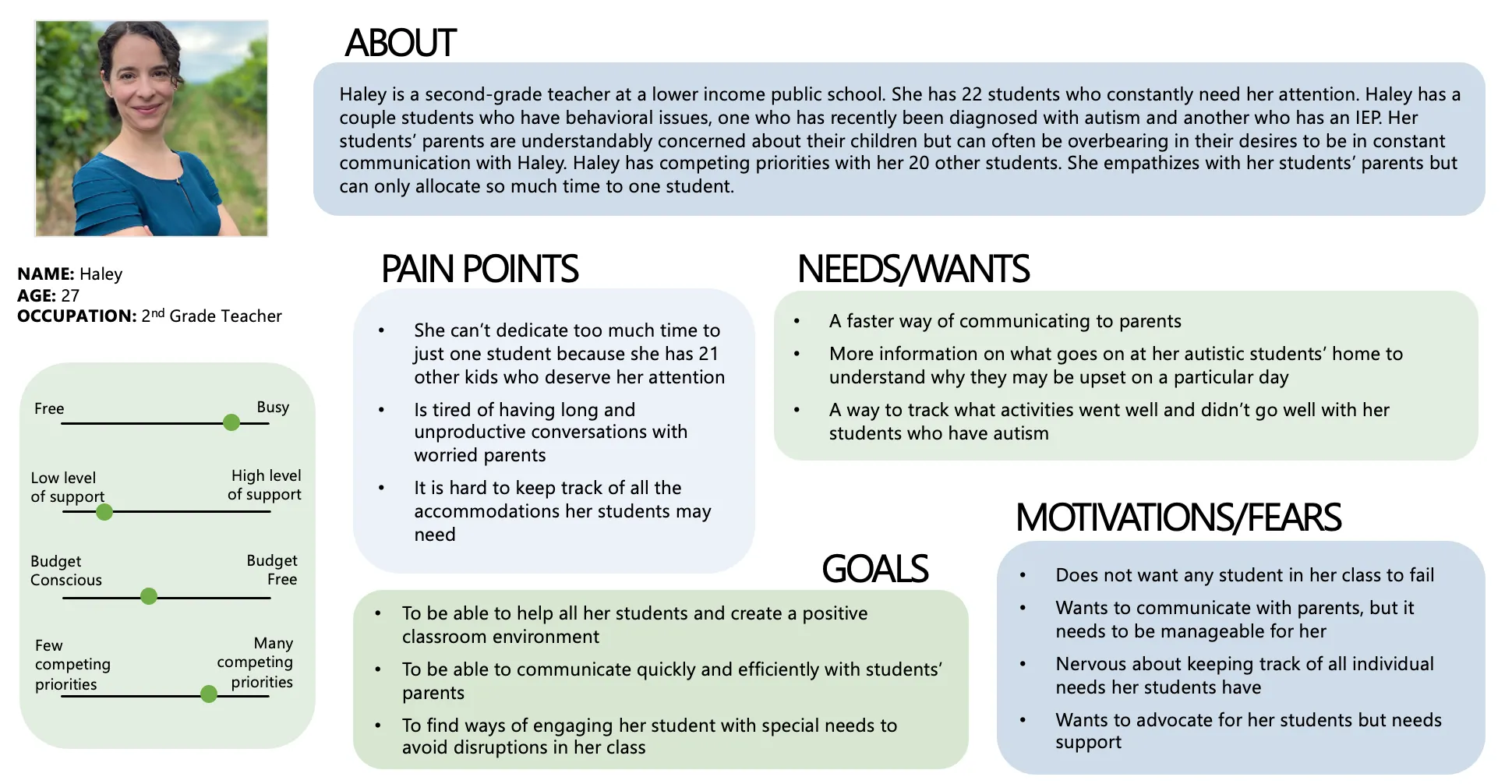
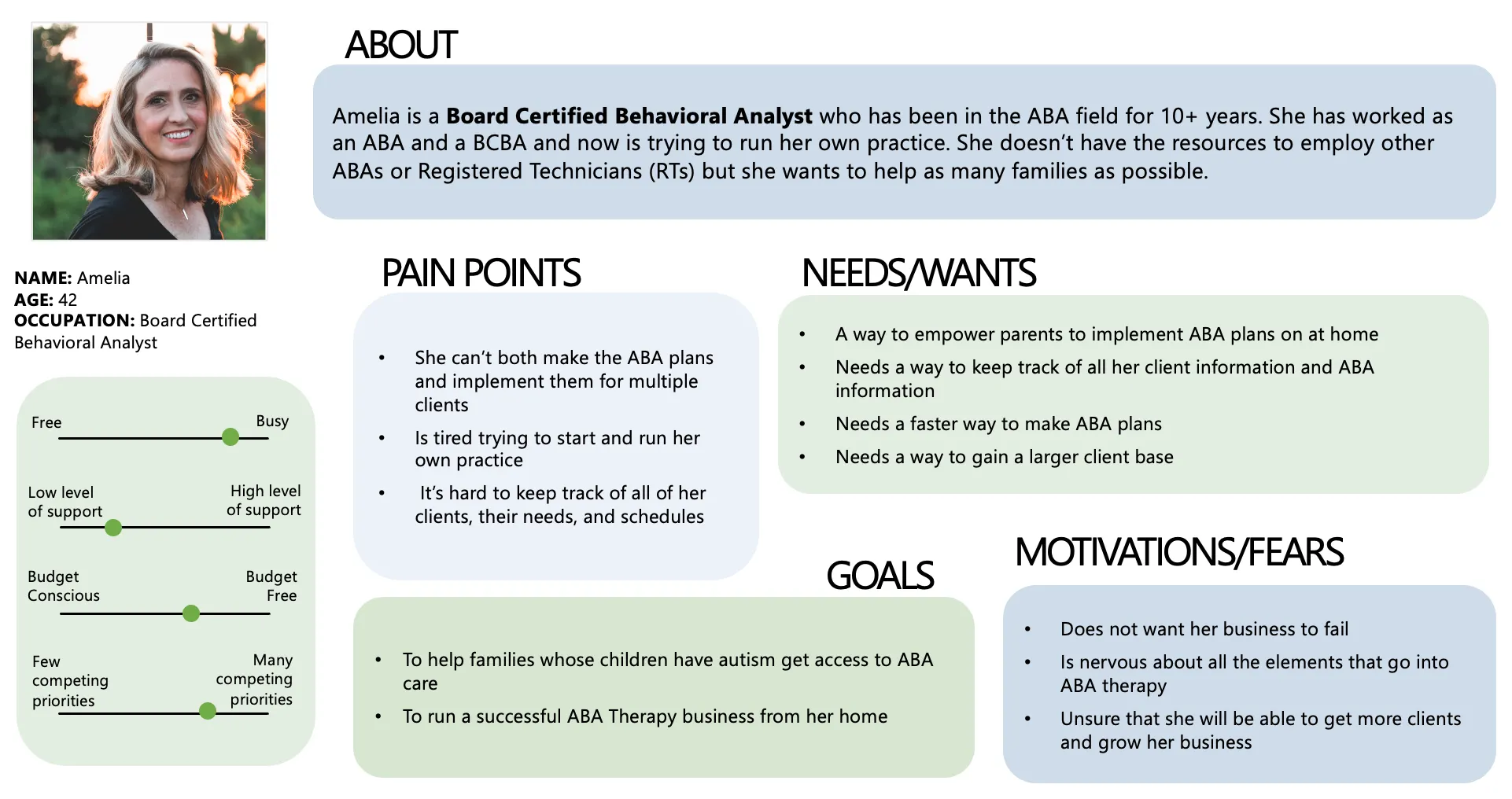
I identified three core user groups -- parents, Board Certified Behavioral Analysts (BCBAs), and teachers -- and developed detailed personas for each based on user stories and interview findings.
Journey Map
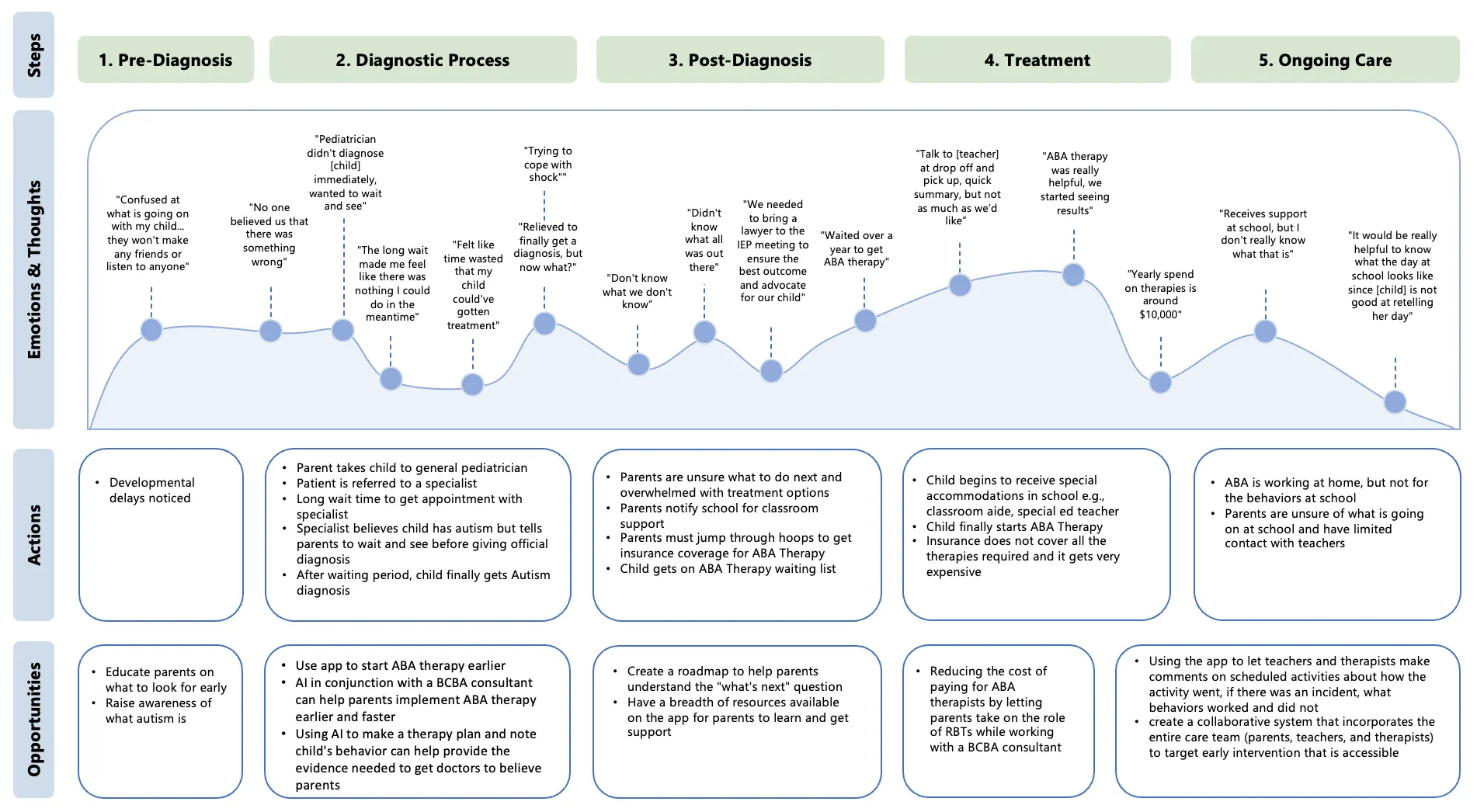
I mapped the full parent experience from pre-diagnosis through ongoing care, identifying emotional highs and lows and key opportunities for intervention at each stage.
The Solution
I narrowed the solution down to three interconnected parts:
Part 1: Increasing Access to ABA Care
Connect parents with private BCBAs through the app. Use AI to develop individualized ABA plans reviewed by a BCBA for faster treatment. Equip parents with tools and techniques to implement ABA at home.
Part 2: Help Teachers Help Their Students
Track student schedules across school and home. Log behaviors and incidents efficiently. Communicate with parents when issues arise without adding burden.
Part 3: Continuous Feedback & Collaboration
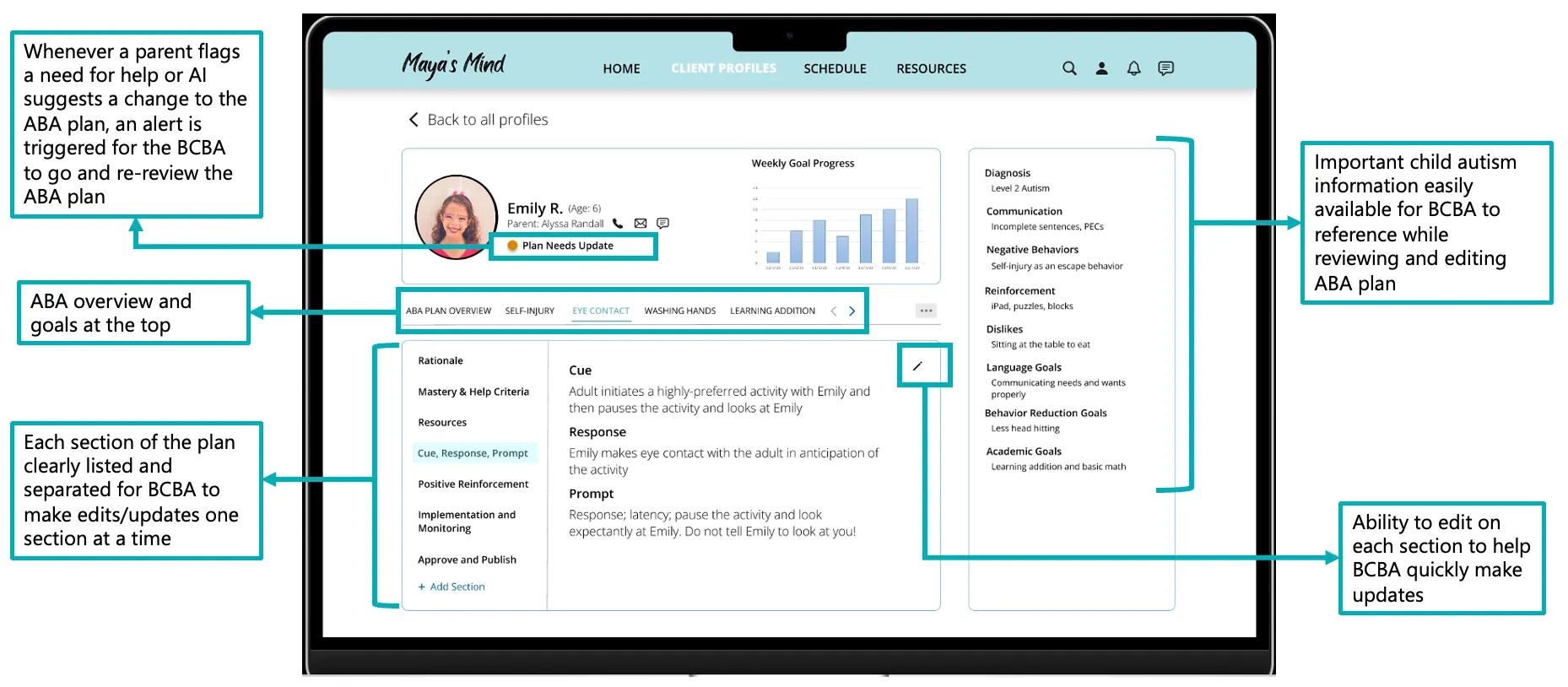
Use AI to analyze logged progress and automatically update ABA plans. Create a connected loop between teachers, parents, and BCBAs for a collaborative approach to care.
How It Works
The core experience follows a cyclical process:
Design Process
I followed a rigorous UX methodology over 16 weeks, starting from research and moving through multiple rounds of wireframing, testing, and iteration.
Low-Fidelity to Mid-Fidelity
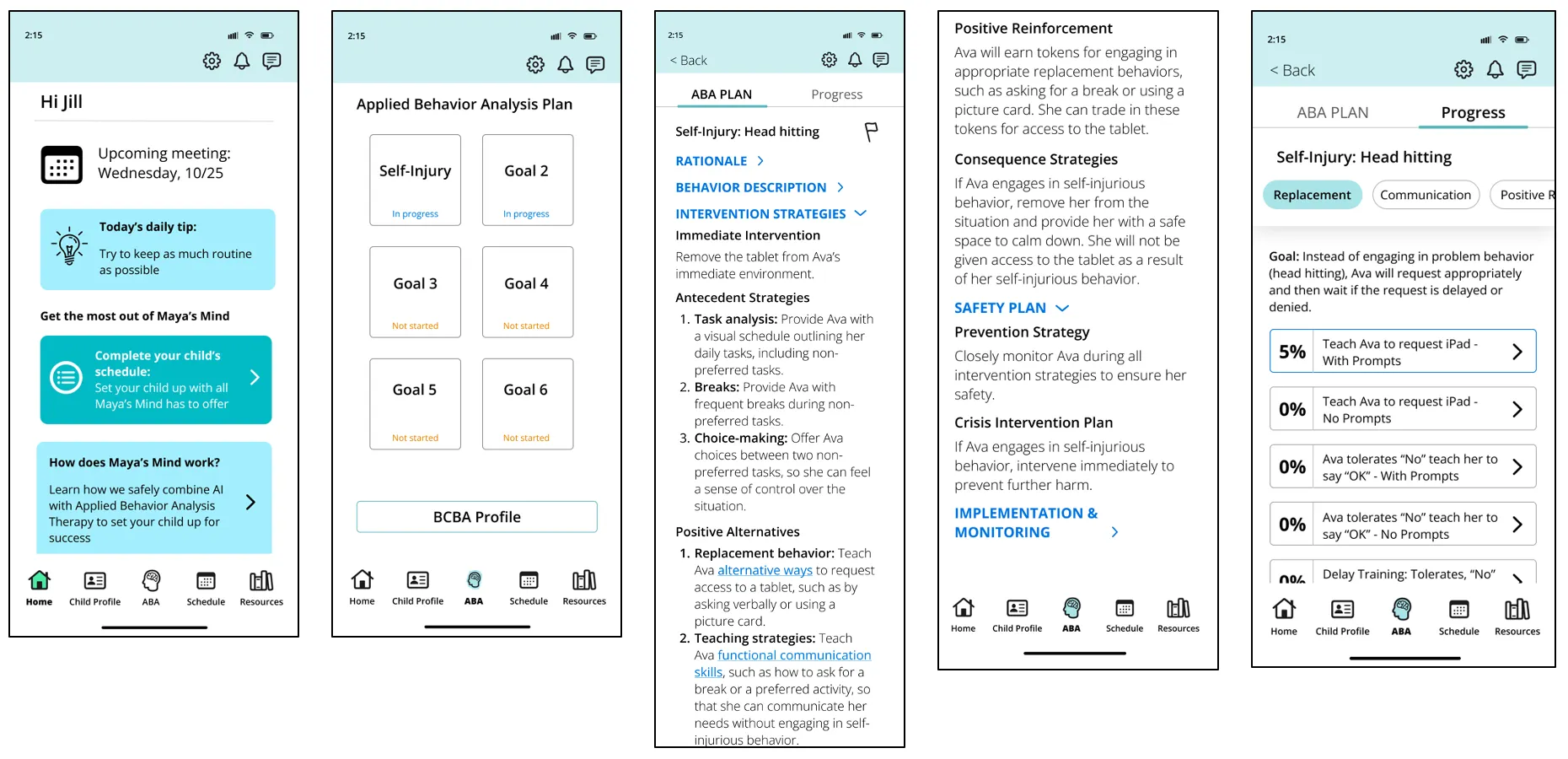
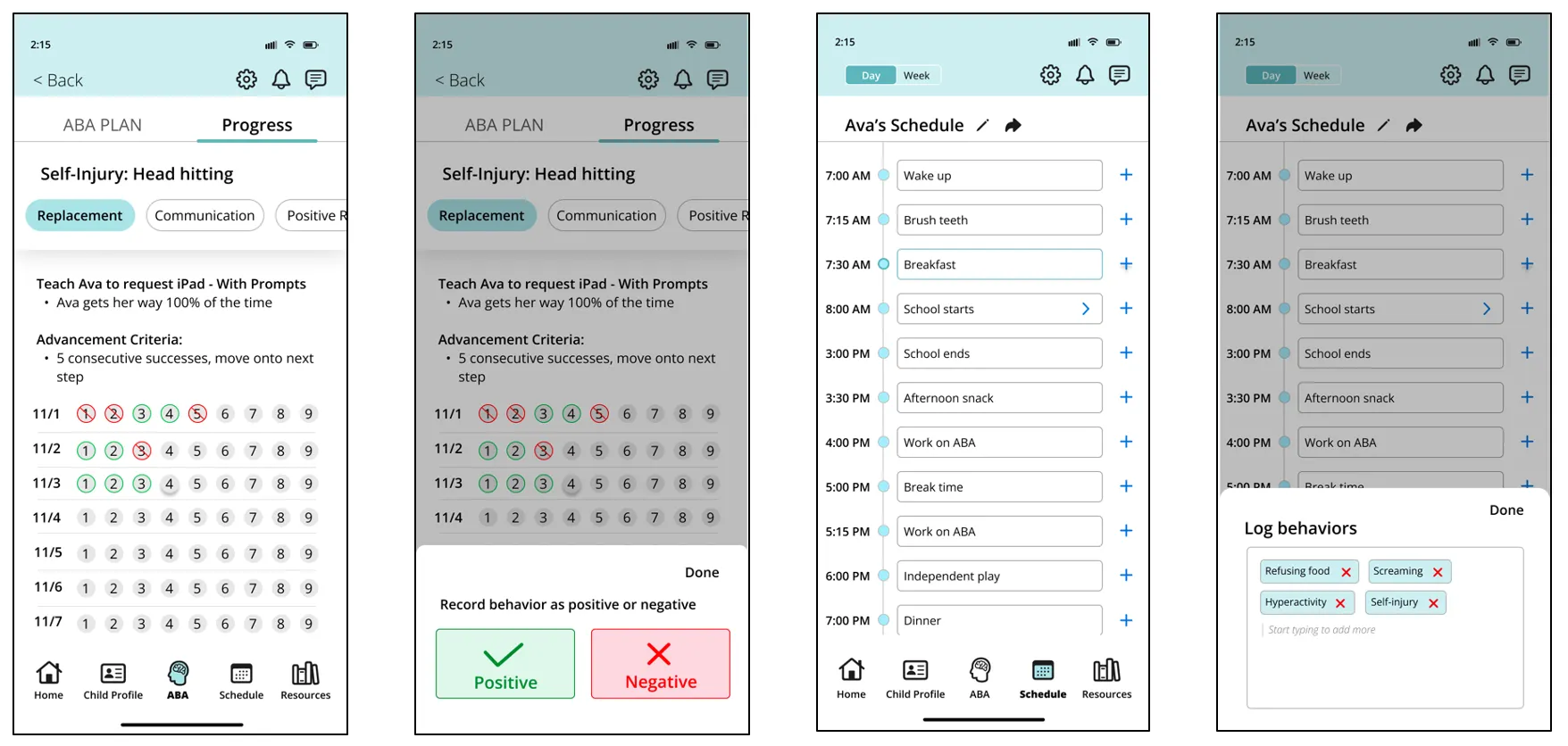
I developed multiple versions of low-fidelity wireframes for key task flows, then progressed to mid-fidelity prototypes for usability testing before arriving at the final branded high-fidelity designs.
Usability Testing
I conducted three rounds of iterative usability studies across 11 participants -- eight parents and three healthcare professionals. Key findings shaped the final experience:
Navigation Clarity
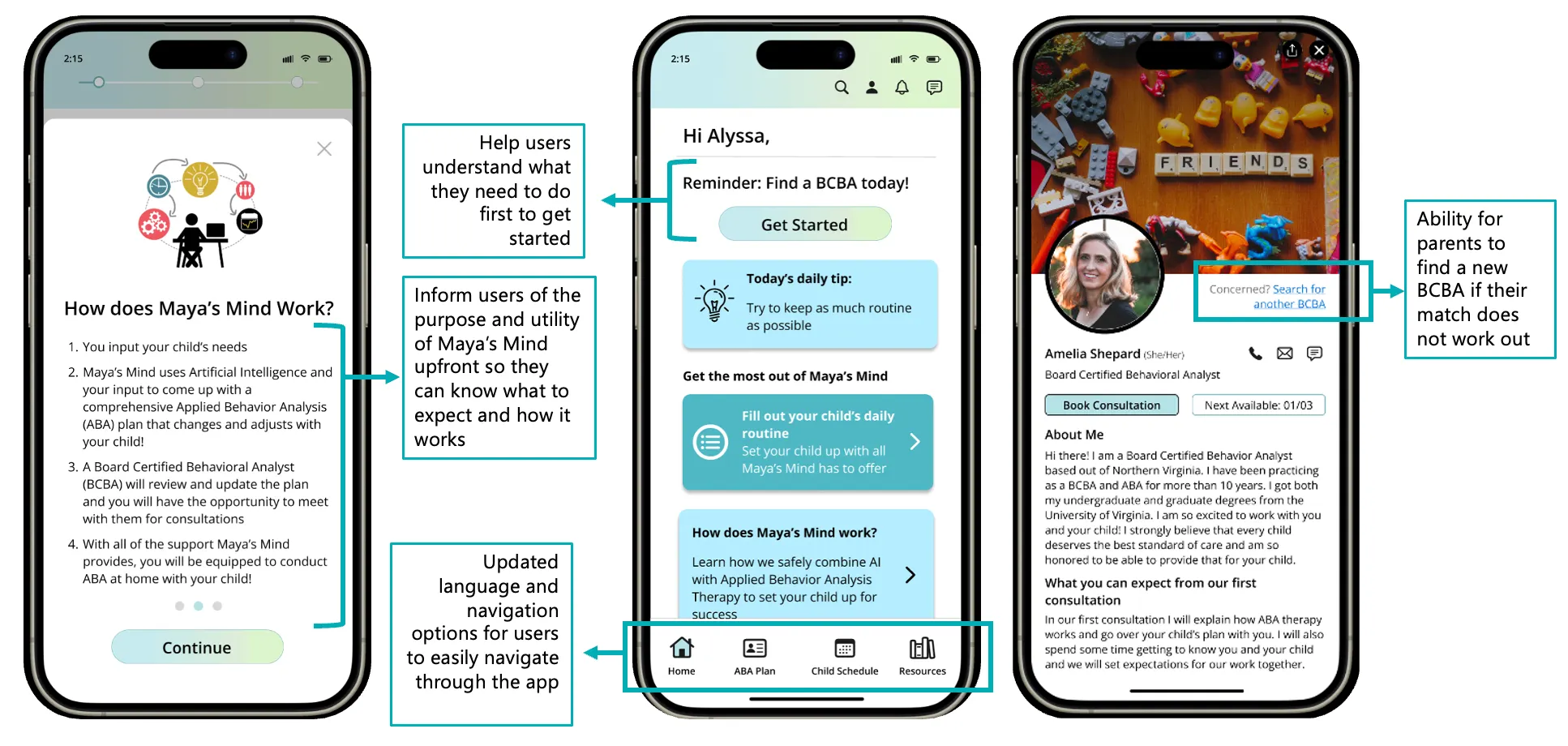
Participants found the original navigation confusing -- they couldn't find the ABA plan and were unclear why the ABA tab served dual purposes. I restructured the information architecture to separate these concerns.
Onboarding Expectations
Users were initially unclear on the app's full function -- most thought it was just for finding ABA services. I added onboarding screens to set expectations upfront about the app's holistic approach.
User Autonomy
Parents wanted the option to choose or change their BCBA if personalities didn't mesh. I added the ability to search for another BCBA while keeping wait times low through auto-matching.
Behavior Logging
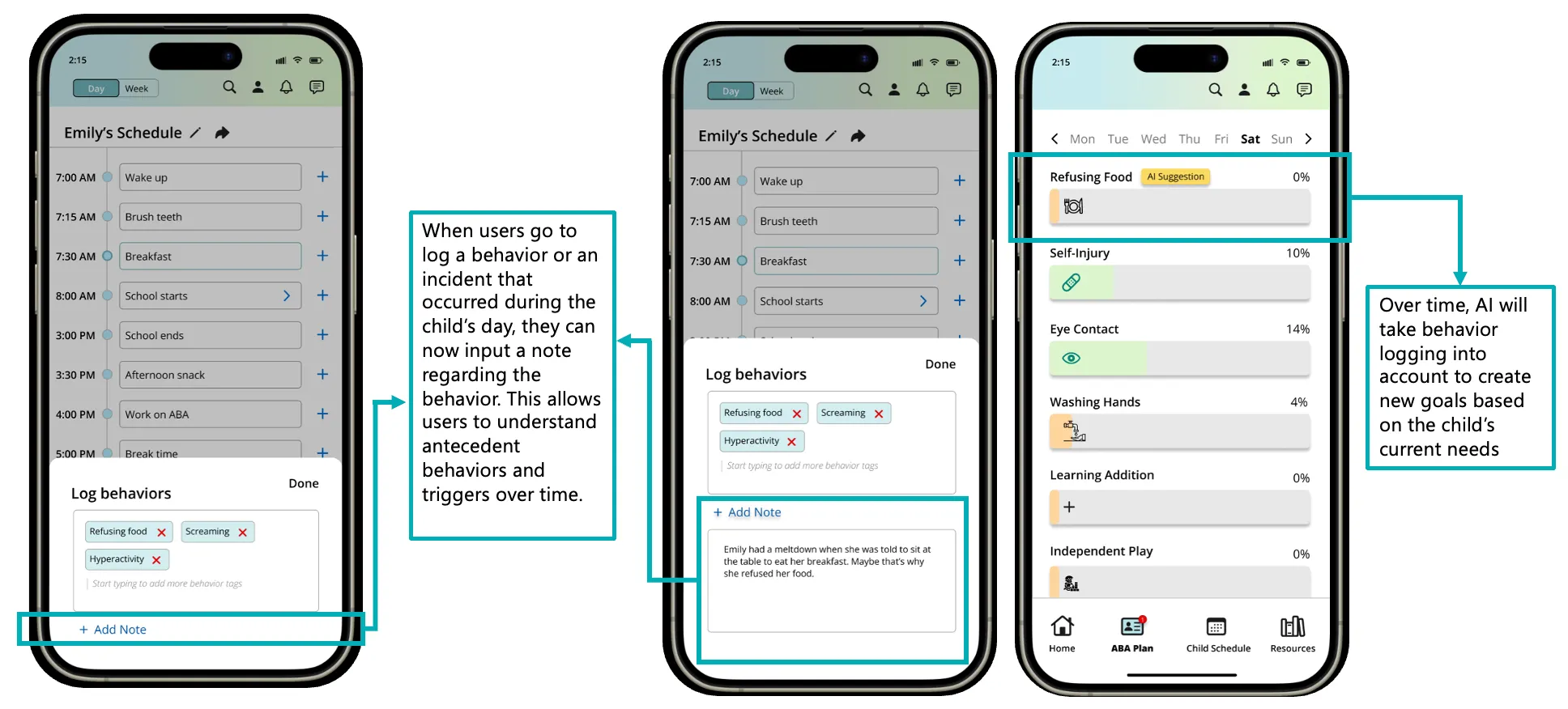
Users wanted to log notes and antecedents alongside behaviors to better understand triggers. I added context-logging that pairs behaviors with goals for richer progress tracking.
Final High-Fidelity Solutions
The final designs addressed every opportunity identified during testing, evolving into a polished, branded experience across both parent and BCBA flows.
Outcomes
The final usability results were deeply encouraging:
100%
of users said they would want to use the app with their child
100%
of users believe this app would help reduce ABA wait times
100%
found the app straightforward and cohesive
100%
of healthcare users found the daily appointment layout helpful
In Their Words
"Would be a really helpful app. I love that you will be connected with a BCBA for checking and making sure things are correct."
"Empowers parents to be able to help their kids more."
"I like that behaviors are matched with goals that we are working on. Kind of like a diary for your kid's autism."
"If I didn't have access to an in-person ABA, I would definitely use it... I would have access to a BCBA and the AI can help me with working towards goals. Pretty cool idea!"
AI & Data Privacy
Because Maya's Mind deals with sensitive health information about children, I took data privacy seriously from day one. The app adheres to HIPAA standards with a focus on:
- •Transparency and disclosure so parents know exactly how their child's information is being used
- •Anonymization and de-identification of sensitive data
- •Data protection through security software and appropriate safeguards
- •Breach notification protocols as required by HIPAA
Reflections
This project stretched me in ways I didn't expect and reinforced why empathy is the foundation of everything I design:
Designing for a community I don't personally identify with
This pushed me to go deeper with empathy -- to really listen, to sit with people's stories, and to let their experiences shape every design decision rather than my assumptions.
Learning AI from scratch
I had very little AI experience before this project. Through research, I learned what would be needed to responsibly integrate AI into a healthcare context -- a skill that has since become central to my work at Appian.
16 weeks to ship
The time constraint forced me to prioritize ruthlessly -- focusing on MVP features and designing for simplicity and efficacy rather than trying to solve everything at once.
Want to dive deeper into the research, wireframes, and full design process?